
Bryair decided to conduct an experiment before Christmas.
Seeing as we have been pushing UVC for improving Indoor Air Quality, it would have been incredibly hypocritical if we at Bryair had not installed UVC within our office.
We installed UVC in our AC system in August 2020 and since have continued performing regular maintenance every three months, ensuring that we keep the filters clean.
We have a split AC system with two cassette units installed within the ceiling void. These cassette units are in the same room and therefore spaced on 3.5m apart.
Bryair is fully behind the fact that UVC offers so many health benefits as well as helps to save money by reducing energy bills. Personnel were present in the office during the installation of the UVC system and observed the coloured UVC light. However, once the cassette was closed, observers could no longer see any visible indication of operation.
- How clean are they?
- Are they doing a thorough job?
- Do the tools used adequately perform the task?
- Is the cleaning spray toxic?
So, seeing is believing, right?!
Our Experiment
It was decided to perform the experiment within our office. We decided we would turn the UVC off in one of our cassette units in November. We then purchased contact plate petri dishes and conducted a swab test in January. The team pushed each of the contact plates into the coil fins of the cassette units in the office, sealed them, and left them in place over the weekend.
Figure 1 shows that the clean Petri dish on the left was swabbed from the unit with UVC. The Petri dish on the right, showing clear mould growth, was swabbed from the non-UVC cassette.
Two and a half days after performing the swab tests, the result is conclusive. The team has now sent the contact plates to a lab to analyse the contents of the mould. But this does prove what an efficient job UVC does.
Our Findings
Inhaling mould fragments or spores can inflame the airways, causing nasal congestion, wheezing, chest tightness, coughing and throat irritation. Prolonged exposure to high levels of mould can reduce lung function and cause chronic health problems such as asthma.
Evidence of mould forming on coils is representative that a biofilm has formed on the coil. The mould doubles in size every 4-6 hours and easily multiplies into a billion organisms in 12 days. As long as the mould is ‘alive’, it will keep growing. This biofilm continues to make the HVAC system less and less efficient as the biofilm grows.
Even a biofilm on the coil with 0.15mm thickness will reduce the efficiency of the AC unit and will require an extra 11% of energy to drive the unit to the same settings. Since the units are underperforming, users often turn up the settings on the control units to achieve the same thermal comfort, which in turn requires even more energy to obtain the same results.
Experiment Conclusion
Installing UVC within the HVAC systems provide better health and wellbeing, increased employee productivity, less sick days, equipment sustainability, obtain BREEAM® credits, reduce Carbon Foot and save money on energy bills which have over the past 10 years risen sharply and will continue to do so as the government strive towards a carbon net zero by 2050.
Seeing is Believing!!
If you have a project you’d like to discuss, please contact us.
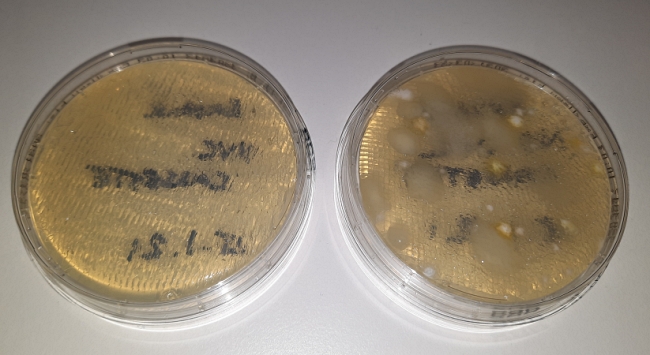
Figure 1: Petri dishes from experiment